From useful information to places people can shape.
EcoNomad is a multi-regional, circular ecosystem in development. Three related efforts have different jobs: Graphared designs and researches systems; EcoNomad explains the work and develops the place-based vision; Harp’s Moving Store (HMS) proposes the moving and reuse marketplace that can turn materials and demand into activity.
This page describes a working vision. Candidate sites, institutional relationships, and later programs are proposals unless expressly stated otherwise.
Three names. Three distinct jobs.
Graphared completes the structure as the consulting and systems design practice. It can research, plan, and contract for the work behind the public EcoNomad vision and the HMS marketplace.
Graphared
Strategy, research, data design, feasibility, and implementation planning. Contracted work can test demand, map operators and resources, design repeatable systems, and bring evidence back into the public thesis.
Visit Graphared ↗ 02 / Public thesis & placeEcoNomad
The publication, civic reporting, agritourism interviews, verified resource work, regional relationships, and developing Village Center pattern. It makes the system legible and invites people to shape its cultural and civic direction.
Explore the magazine ↗ 03 / Moving & reuseHarp’s Moving Store
HMS is the proposed urban village with moving as its recurring economy: movers, trucks, storage, local brokers for leasing and purchase, interior stylists, and Airbnb-style short-term rentals for people between homes connect to gig-based carpenters, upholsterers, painters, plumbers, and other housing trades. Shared equipment, an incubator, daily services, a warm mall concourse, and possible live/work accommodation support their businesses. Reuse is a byproduct of that activity.
Visit HMS ↗The entities can reinforce one another without being treated as one bank account or one legal organization. Each proposed project and partner relationship needs its own terms, obligations, and evidence.
A move can become more than a move.
A household or employer needs to relocate. HMS coordinates services and identifies useful furniture, fixtures, materials, and skills. Items can be resold, repaired, or directed to makers and projects instead of discarded.
Graphared can study the demand, workflows, and economics. EcoNomad can document what works, connect people to resources, and develop the next place-based application. The loop is meant to produce income, usable material, training opportunities, and better evidence for the next decision.
Construction and demolition salvage is one possible institutional stream within HMS; the customer-facing moving journey is broader.
- 01Move
Intake, transport, storage, temporary housing, and service partners.
- 02Recover
Resale, consignment, repair, useful components, and maker inventory.
- 03Learn
Trades, operator partnerships, workforce needs, and tested methods.
- 04Build place
Center programs, cultural demand, hospitality, and locally chosen village pilots.
Build the evidence before the buildings.
The sequence is a planning horizon, not a promise of opening dates. Each stage depends on demand, agreements, local governance, permits, and financing.
Publish & organize
Reporting and essays; a sourced resource database; interviews; service and skills mapping; public events in existing venues. Public search tools and an app are future development.
Explore this path ↗ Years 1–2 / Test transactionsMake the marketplace useful
Test moving and trade-provider demand for the planned Oakland HMS, alongside the Humboldt app pilot; explore a hybrid subcenter only where local partners and economics support it. Test arts itineraries and scope a Hawai‘i pilot separately.
Explore this path ↗ Years 3–4 / Conditional centerDemonstrate in place
If site feasibility, permits, governance, and funding work, a first Northern California Village Center could combine classes, materials, arts, agritourism stays, land stewardship, and building demonstrations.
Explore this path ↗ Years 5–7 / Two corridorsDeepen the network
Develop hybrid urban and rural subcenters only where local demand, partners, and operating economics support them. Develop Appalachian demand and predevelopment; education modules with Knoxville College would require agreement.
Explore this path ↗ Years 8–10 / Selective scaleAdapt region by region
Evaluate a second HMS urban village near the Washington, DC or Philadelphia region and a potential Texas metro location, each only after demand and property economics support it. Any EcoNomad Village Center is separately planned and financed.
Explore this path ↗The marketplace and the Village Center do different work.
The full HMS urban village and full EcoNomad Village Center serve different daily economies. Smaller hybrid subcenters can combine selected features of both in urban or rural communities, depending on local demand, operators, and place.
HMS urban village
An urban village for households and employers in transition: moving companies, trucks, storage, local real estate brokers for leasing and purchasing, interior stylists, and short-term rentals for households between homes create recurring demand for independent housing trades. A warm mall concourse, washers and dryers, business services, an incubator, a large shared-equipment reengineering lab, and possible live/work accommodation for operators support daily life and enterprise. Reuse follows from the movement of goods.
Explore this path ↗Place-based demonstrationVillage Center
A regional teaching and demonstration place for building, care, culture, hospitality, enterprise, research, and pilot clusters. Continuing briefs let professionals and communities test methods in public. Each decision becomes a lesson for locally governed EcoNomad Villages that adapt the pattern under their own agreements. A land steward, site manager, operators, and participating communities may have different roles.
Explore this path ↗Hybrid subcenters
A smaller site may pair an HMS moving and trades interface with Village Center learning, arts, food, hospitality, or material demonstration. Some will be urban; others may be rural. The program is chosen for the community and building rather than copied from either full destination.
Explore a hybrid hub ↗A pattern book, not a single blueprint.
The Center teaches by building and operating itself. Its pilot clusters and documented projects become usable lessons for communities developing their own locally governed villages. Paths and shared spaces, natural setting, adaptable building cores, durable details, access, water, energy, fire safety, and maintenance form the design questions. Reclaimed components, modular systems, hemp lime, earth, and other methods are candidates to test, not committed construction methods.
Explore this path ↗Culture creates demandArts, food, makers, and care belong in the operating model.
Events, residencies, performance, hospitality, and paid work can build an audience before real estate commitments. Each Center would need its own artistic signature and cultural governance; local communities choose what fits.
Explore this path ↗The campus is the ongoing project.
Village Centers can grow through invitational design rounds, hackathons, build challenges, performances, and industry gatherings. Architects, engineers, interior designers, builders, artists, musicians, and other firms work from actual campus needs. They develop their own excellence while creating the place together.
Set a real brief
Define a campus need—homes, water, energy, landscape, interiors, food systems, or cultural space—with site conditions, budget, community goals, and clear participation terms.
Explore this path ↗02 / CREATEWork in public
Teams and firms develop approaches through invitationals, hackathons, prototypes, and demonstrations. They may collaborate across disciplines while showing distinct solutions.
Explore this path ↗03 / RECOGNIZEShare the work
Exhibitions, peer review, performances, documentation, and awards give contributors visible credit. Firms can convene clients and their industries around what they learned.
Explore this path ↗04 / BUILDCarry it forward
Selected work can move into paid design, testing, procurement, or construction when the local community approves the direction and funding and agreements are in place.
Explore this path ↗This is a continuing campus-building cycle, not a one-time event. Conferences and working spaces also serve firms’ own business needs. Each round needs transparent criteria, authorship, compensation, safety, and local decision-making before it opens.
A place gives people a reason to arrive.
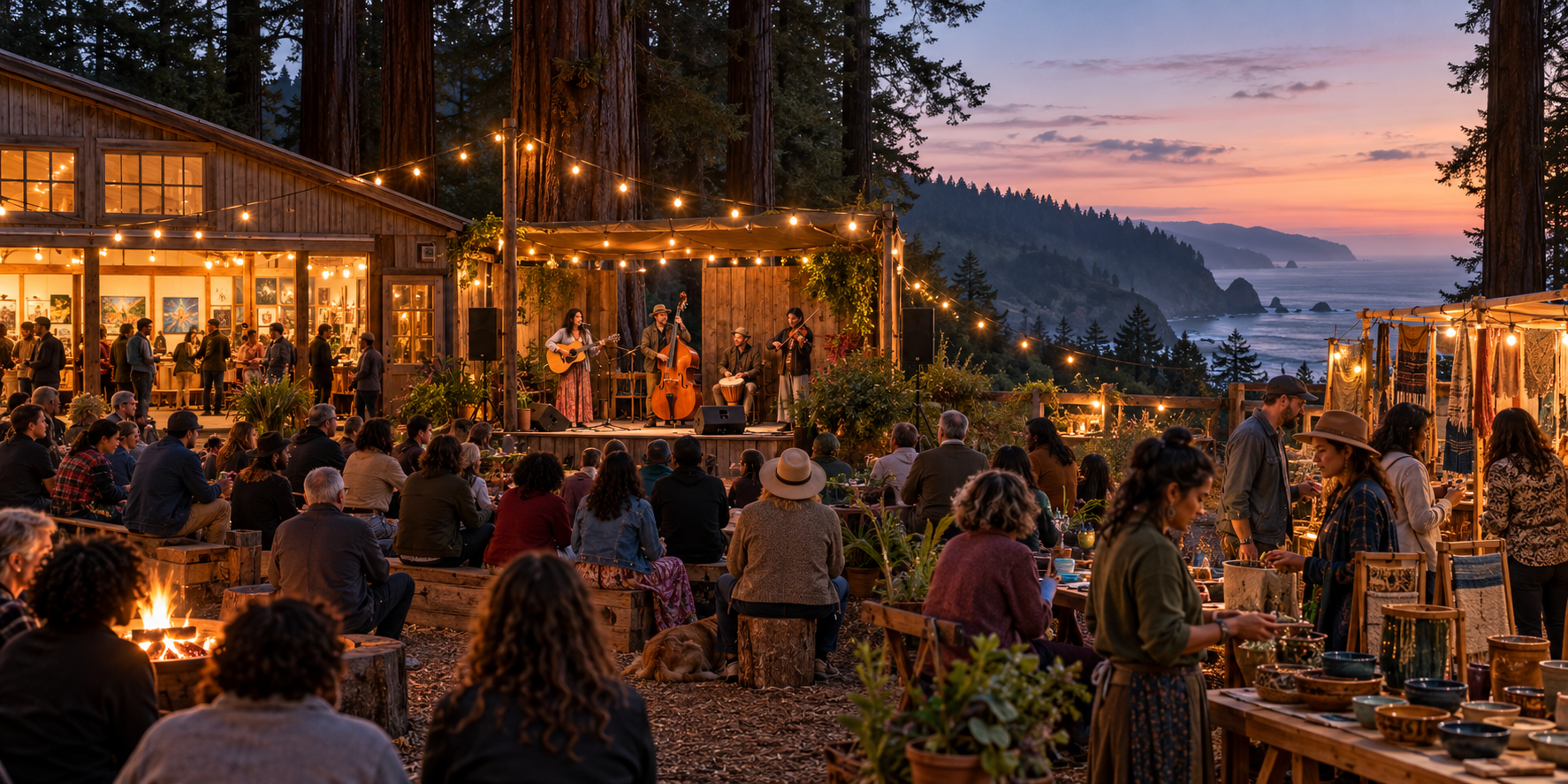
Each regional Village Center needs a locally authored artistic signature. Music, performance, visual art, craft, food, and storytelling create a cultural invitation that can connect residents, makers, visitors, and the wider agritourism route. The work begins with artists and hosts before a permanent venue is built.
Commission and test
Partner with existing venues and local hosts for performances, maker workshops, exhibitions, and storytelling. Agree to artist fees, image and music rights, production costs, and the host’s role before promoting an event.
Explore this path ↗02 / The visitor journeyConnect the region
Build an itinerary with local food, makers, stays, landscapes, and learning experiences. Agritourism is more than a visit to a farm: it is a way to keep visitor spending with the people who shape a place.
Explore this path ↗03 / A regional signatureGive each Center its own voice
At the proposed Del Norte flagship, trades, arts, tourism, and pilot villages can meet in one destination. Appalachia and Hawai‘i would develop their own cultural programs with local authorship and governance, rather than import a fixed show.
Explore this path ↗Repeat a paid program when audiences return and local artists and vendors benefit. Track ticket sales, visitor nights, repeat bookings, artist pay, and net event results. Permanent arts space is a later decision based on real participation and an agreed operating model.
Explore the storytelling formats ↗Connected principles. Different places.
Oakland is the selected first HMS city. A later East Coast HMS location and a Texas metro location are not selected. The EcoNomad Village Center and Hawai‘i research geography follow separate decisions; no named property is represented as acquired or operating.
Northern California
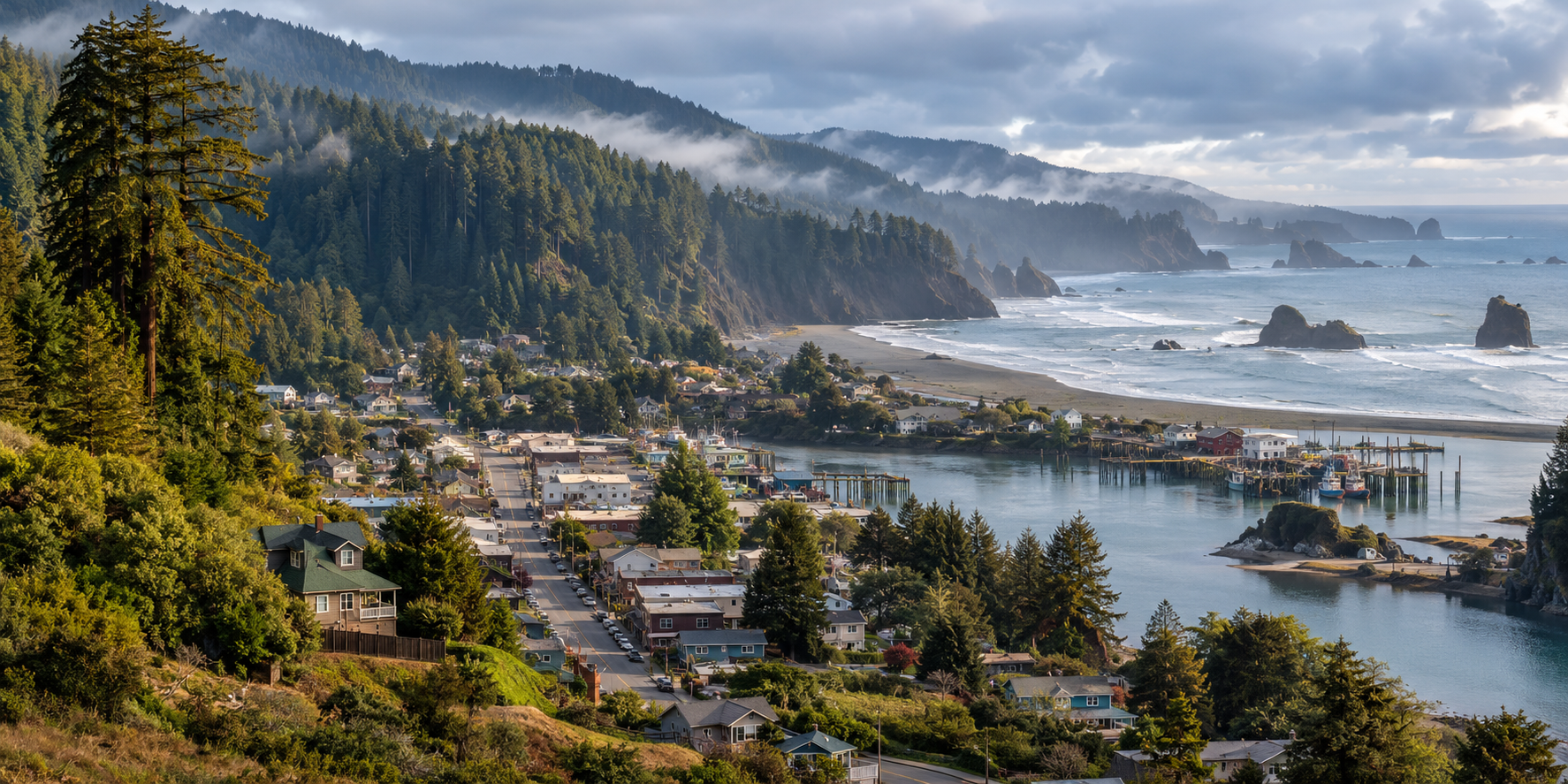
Humboldt anchors the editorial work and the proposed money-free HMS app pilot. Oakland is the planned first physical HMS urban village. The former Bar-O area near Gasquet is a separate candidate EcoNomad Village Center, subject to title, access, community process, permitting, and finance. Other Northern California HMS sites have not been selected.
Explore this path ↗ East Coast / locations separateMetro HMS + Appalachia
A later HMS urban village would be near a major East Coast metropolitan area; the Washington, DC and Philadelphia regions are possibilities, with no choice made. A Martinsburg-area EcoNomad Village Center is a separate proposal. Knoxville College and UPA remain possible education and industry collaborators, with no agreement represented here.
Explore this path ↗ Future HMS / undecidedTexas metro area
A full HMS urban village is contemplated in Texas, but no city or building has been chosen. Smaller hybrid subcenters would be evaluated independently against urban or rural demand and partners.
Explore this path ↗ Research pilot / proposedHawai‘i Island
A Hilo-side pilot could test the visitor proposition and village design with locally grounded cultural governance. Research conversations are exploratory. Edgar’s proposed doctoral home is UC Davis Geography; a Hawai‘i research relationship would be distinct and would require agreement.
Explore this path ↗Keep the mission and the ledgers clear.
The long-range idea is that commercial activity can help seed place-based work. Each Center still needs a credible way to cover routine operations and replacement reserves.
Locally governed villages should retain control over their own assets and decisions. A transferable pattern can support them without requiring every community to purchase from the same supplier.
Pay for useful goods and services.
Explore this role ↗GrantsSupport eligible public outcomes under their own restrictions.
Explore this role ↗LendersFinance assets against a repayable cash flow.
Explore this role ↗Donors & patient capitalMay support acquisition or public-benefit work under defined terms.
Explore this role ↗